•
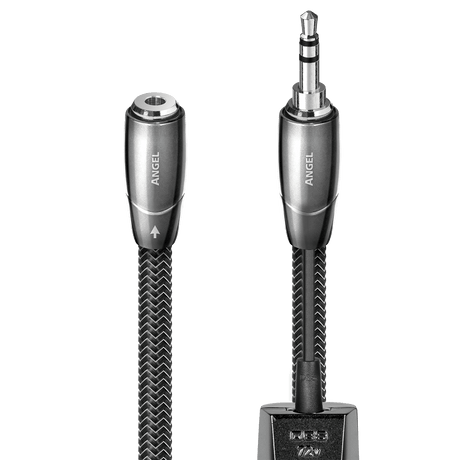
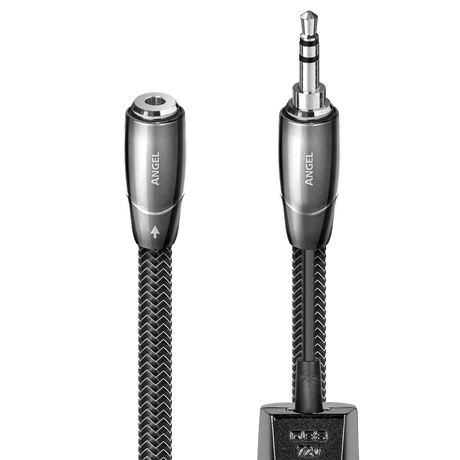
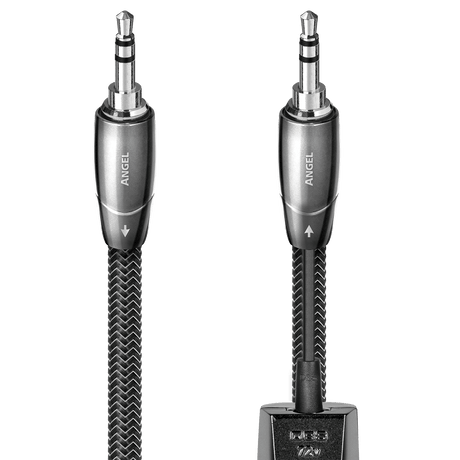
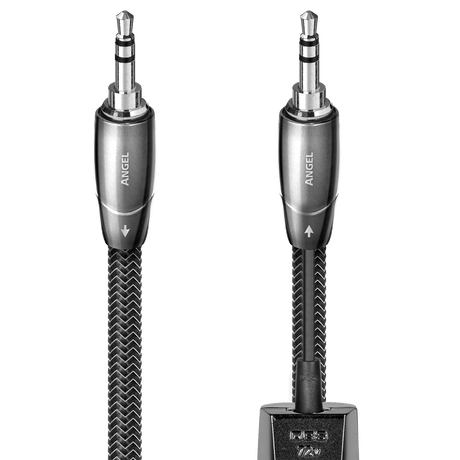
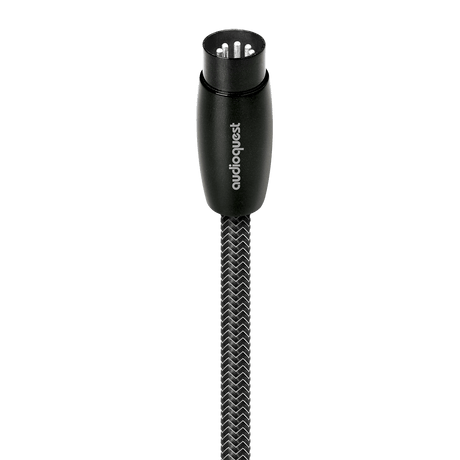
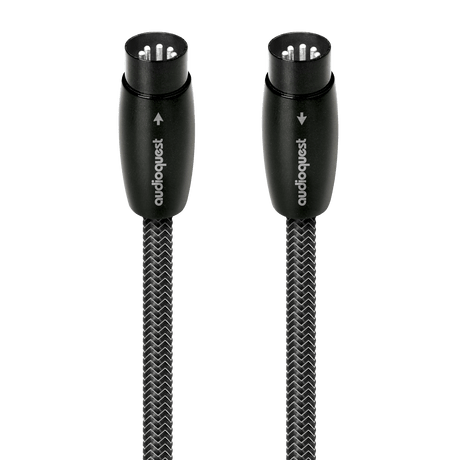
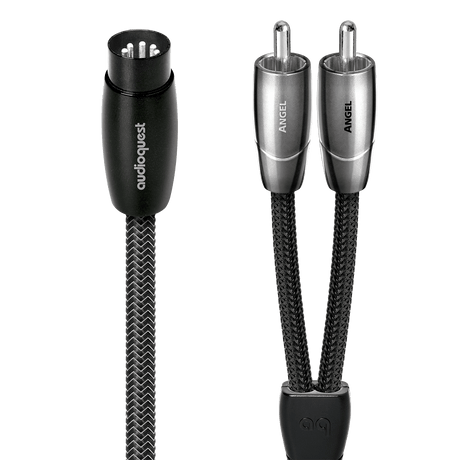
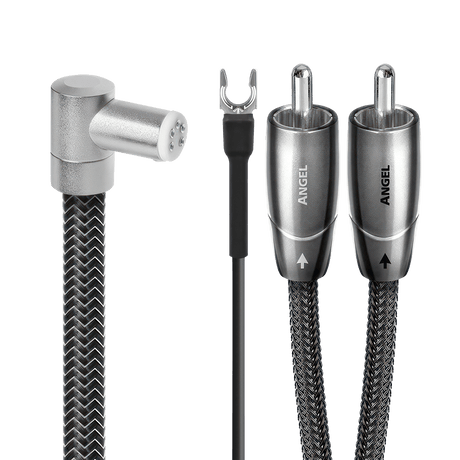
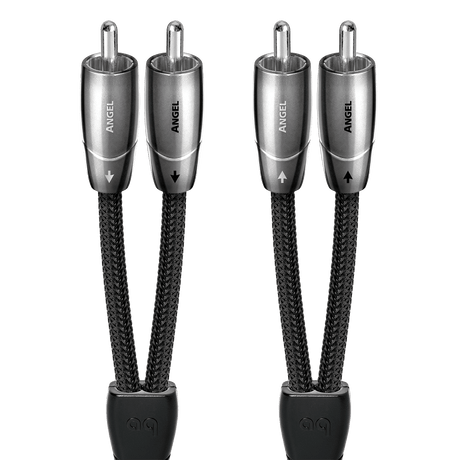
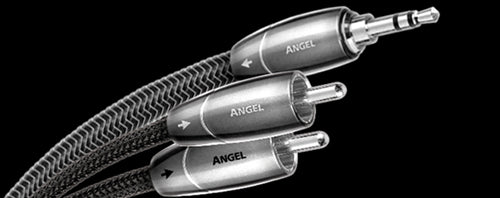
If you’ve ever wondered about the arrows on AudioQuest cables, read any of our educational materials, or merely followed any of the online chatter regarding our products, perhaps you’ve wondered what this “directionality” thing is all about.

There is the widely accepted version of directionality: In most audio-grade shielded interconnects, as compared to standard coax, negative has its own internal conductor and the metal shield is attached to ground at only one end, thus defining the cable’s directionality. Many cable manufacturers end their exploration of directionality there, going only as far as to mark their cables for directionality based on the relationship of shield to ground, but altogether neglecting conductor directionality. Because we believe in directing noise to where it can do the least harm, we, too, believe in the advantages of controlling for the attachment of the shield. In fact, long before we controlled for conductor directionality, AudioQuest interconnects were also controlled for direction based on the relationship of shield to ground.
Over the years, our understanding of conductor directionality and its effect on audio performance has steadily evolved, growing stronger and more complete. While we’ve always been keenly aware that directionality plays a significant role in the overall sound of any hi-fi system, we couldn’t completely explain it. This was okay: We trust our own ears and encourage listeners to do the same. The test is easy enough: Simply listen, then reverse the direction of the cable, and listen again.
In one direction, music will sound relatively flat and a little grainy, as though being forced through a screen door. In the opposite direction, the obstruction is removed and music will be communicated with a natural ease, depth, and an open invitation to pleasure. When presented with a cable whose conductors have been controlled for the correct low-noise directionality, a listener feels a sense of comfort and relief: Ahh…Music!

But the definitive empirical evidence of directionality demands seeking a scientific explanation. What is the technical explanation for directionality?
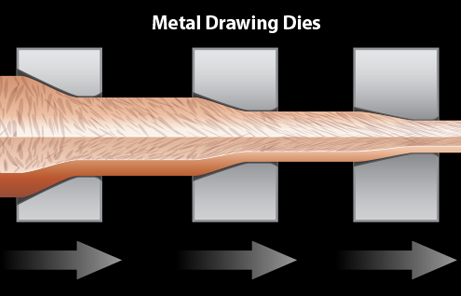
In order to fabricate copper or silver into a strand or conductor, it must first be cast and then drawn through a die—a process that inevitably creates a directional, chevron-like pattern in the conductor’s internal grain structure and a non-symmetrical overlay of grains at the conductor’s surface.
While most are either unaware of conductor directionality or have chosen to ignore it, we have learned to use conductor directionality to our advantage.
A conductor’s asymmetrical surface structure causes a directional difference in impedance at noise frequencies and very high interference frequencies. Due to skin-effect, such high-frequency energy travels almost exclusively on the surface of a conductor, giving significance to the directional difference in impedance at these frequencies. Because all energy will always take the path of least resistance, when a cable is oriented so that the high-frequency noise—whether from a computer, radio station, cell tower, etc.—is “directed” to ground, or to the end of the cable attached to less vulnerable equipment, the dynamic intermodulation and associated ringing generated in the active electronics will be greatly reduced.
Our efforts toward the proper dissipation of noise are not limited to our analog and digital cables, but extend to other AudioQuest products, as well—most recently evidenced in our Niagara 1000 and 7000 Low-Z Power Noise-Dissipation Systems, in which every single link in the conducting path has been properly controlled for low-noise directionality.
As always, the proof is in the listening.
The unpleasant, strained sound that occurs when conductors have the wrong orientation is the result of noise entering and causing misbehavior and intermodulation in an active circuit. The more relaxed, full-bodied sound of correctly oriented conductors is the product of less high-frequency interference—conductor directionality fully acknowledged and put to its best use!
Ahh…Music!
Featured Kabel
Alle anzeigenNachrichten & Bewertungen
-
Obvious and Significant Value for Money
Using DragonFly Copper to drive headphones connected to a smartphone or laptop, Qobuz's Simon Lucas decides our latest DAC represents obvious and significant value for money.
-
A Better DragonFly
Twittering Machines' Michael Lavorgna decides that Copper is indeed a better DragonFly.
-
Reunited and It Feels So Good: DragonFly and JitterBug
Jürgen Kraus decides DragonFly Copper is a fine wine that pairs nicely with our JitterBug FMJ USB filter.
-
DragonFly Copper Delivers Excellent Measured Performance
DragonFly Copper satisfies even the most rational of audiophile objectivists with its predictably boring measured performance. Yay!
-
The Champ of Fit and Forget
DragonFly Copper receives AVForums' Recommended Award. "It's still the champ of fit and forget."
-
DragonFly Copper: Beautiful Music at Home and On the Go
Our friends at Crutchfield take a close look at our new DragonFly Copper. "If you're chasing sound quality at home and also want a way to take superior sound quality...
-
DragonFly Copper: Exactly What We Need in 2026
The editorial team at HiFi.nl decide DragonFly Copper is exactly what we need in 2026 — a powerful, efficient, versatile audio product that makes consistently beautiful sound at home and...
-
Vinyl and Hi-Fi: Perfect Together
Montreal's beloved record shop, Cheap Thrills, and AudioQuest dealer Layton Audio work together to introduce vinyl enthusiasts to the joys of high-performance audio.